
I have gotten really, really good at not needing people. Like, impressively good. God and I are currently discussing it. And by “discussing,” I mean He pointed directly at something I was incredibly proud of and showed me that I had dressed a stronghold up like a personality trait: Isolation.
Well, shoot. I mean, I didn’t call it isolation. I called it independence. I called it being capable, responsible, strong, resilient. A single mama who gets shit done.
I built businesses, raised my daughter, and paid the bills. I handled emergencies, sat in courtrooms, and made impossible decisions. I got sober and stayed sober. I figured out how to make money when there wasn’t enough. I wrote books, rebuilt when things fell apart, and when life handed me another dumpster fire, I grabbed the extinguisher before anybody even knew there was smoke.
“I’ve got it” became less of a sentence and more of my identity, and to be fair?
I, in fact, did have it.
That’s what makes this one so complicated.
The Thing That Saved Me Became the Thing I Had to Surrender
There were seasons when doing it alone wasn’t some cute girl-boss personality trait, y’all. It was survival. When you’ve experienced enough instability, betrayal, disappointment, addiction, loss, or trauma, you learn things. Like not to expect too much and to always have a backup plan. Then you make a backup plan for the backup plan. You learn how to read a room before you ever even think to relax in it, and you learn how to solve the problem before anybody has the opportunity to let you down.
And somewhere along the way, I made myself a promise: I will never need another person badly enough for them to destroy me.
Maybe you never actually say it out loud, but I did, and I built my life accordingly. And it worked… Until it didn’t. Because sometimes the thing that helped you survive one season becomes the very thing keeping you from experiencing the next one.
For me, independence slowly became isolation. Discernment became suspicion, boundaries became barricades, peace became avoidance, and “I’ve got it” really meant, Please don’t get close enough for me to find out whether I can trust you.
The problem is, I wasn’t there anymore.
The emergency had ended. Life around me had changed. God had done an incredible amount of healing, but parts of me were still living like the emergency was ongoing.
Nobody really tells you what comes after you survive.
There Are Chapters After Survival
When I wrote Messy Brave, bravery looked a whole lot like survival: Get through today, stay sober, protect your child, pay the bill, leave when you need to leave, start over when you have nothing, go to church anyway, and keep putting one foot in front of the other when you have absolutely no idea where the path is leading.
That woman was brave as hell. I love her, and I’m grateful for her, but lately God has been showing me something I don’t think I fully understood when I wrote that book:
There are chapters after survival.
And they require an entirely different kind of courage. Sometimes brave isn’t leaving. It’s staying. Sometimes brave isn’t handling it yourself. It’s saying, “Actually, I need help.” Sometimes brave is answering the phone, accepting the invitation, letting somebody bring dinner without immediately figuring out how you’re going to repay them, or telling a safe person the truth before you’ve cleaned it up and turned it into a testimony.
Sometimes brave is letting someone show you—over and over and over—that they are safe until your brain and your body finally stop waiting for them to prove otherwise.
That one is hard for me, because I can intellectually know good people exist—that’s easy—but actually giving myself enough good experiences with good people that my nervous system begins to believe it?
Different story.
Somewhere between surviving and figuring out what comes next?
That’s the woman I wrote Messy Brave for. Not the woman who has everything tied up in a pretty little redemption bow. It’s for the woman still somewhere in the middle of: Addiction. Recovery. Divorce. Custody. Single motherhood. Shame. Starting over. Learning who the hell you are after everything you thought defined you falls apart.
God Wasn’t Asking Me to Become Weaker
This matters, because I don’t believe God is asking me to stop being capable. I am quite capable. I’m resourceful and strategic, and I can figure some stuff OUT, okay?
Those things aren’t character defects, but they do become a problem when they’re used as walls. There is a difference between: “I can do this.” and “I must do this alone.” There is a difference between having boundaries and refusing access to everybody, and a difference between enjoying solitude and disappearing into isolation. There is a difference between trusting God and trusting God while refusing every human being He may be trying to use to answer your prayers.
That last one got me because Scripture is inconveniently clear about this whole people thing.
“Carry each other’s burdens.” — Galatians 6:2
“Encourage one another and build each other up.” — 1 Thessalonians 5:11
“Two are better than one.” — Ecclesiastes 4:9
Turns out, Jesus did not call me to become the Most Self-Sufficient Christian Woman in North Georgia. (Rude).
I’m Not Tearing Down the Life I Built
This was the realization that changed the whole thing for me: I don’t need to tear down the life I built, just the walls around it.
Because I am proud of my life. I’m proud of the mother God has grown me into and my sobriety. I’m proud of the businesses I’ve built and the books I’ve written. I’m proud that when life knocked me flat, I learned how to get up gracefully. I’m proud of the thousand tiny decisions nobody saw that eventually became this life I once couldn’t imagine having.
But I had become so attached to the woman who survived that I was refusing to become the woman who was finally safe enough to live.
READ THAT AGAIN.
Because maybe you’ve done it too. Maybe the version of you who survived was tough as nails. I mean, you had to be, right? But maybe you don’t need to run everything anymore. You can unclench your fists, friend, put the emergency plan down, and stop rehearsing every possible disaster before allowing yourself to enjoy something good. You can let somebody else carry the groceries and you can tell somebody you had a crappy day. You can be loved without immediately preparing yourself for the day that love disappears.
You can live again.
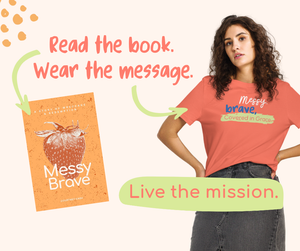
Messy. Brave. Covered in Grace.
Those words have meant a lot of things to me over the years, but today, they mean something different.
Messy means I’m still learning. Brave means I’m willing to let God take me somewhere my survival instincts don’t particularly want to go. And covered in grace means I don’t have to do any of it perfectly.
I wear the words so I can be reminded what they mean: Messy. Brave. Covered in grace.
Jesus Didn’t Just Save Me FROM Something
This is the part I’m only beginning to understand. For years, my testimony was mostly about what Jesus rescued me from: Addiction, shame, destruction, my own decisions, relationships and circumstances I didn’t know how to get out of, and a life I absolutely could not fix myself.
But God.
He came and got me, and for a while, I thought that was the miracle, but Jesus doesn’t just save us from something. He saves us for something.
And maybe that’s part of why He’s dealing with my isolation now, because I keep telling Him I want to go back for somebody else. I want the woman sitting in shame to know shame doesn’t get the final word. I want the addict to know there is a life on the other side that eventually becomes so beautiful you don’t spend every day wishing you could go back. I want the single mama sitting on her bedroom floor wondering how in the world she is supposed to rebuild everything to know:
Girl, I have sat on floors too. Come here, I’ll tell you what I know.
But I can’t pray for God to use my life to build community while simultaneously building a fortress around myself. (Dang it).
Maybe This Is What Healing Looks Like Now
I spent years learning how to stand on my own two feet, but this season is about learning I don’t always have to. Healing currently looks less like escaping and more like staying present.
Less proving, more receiving. Less controlling, more trusting. Less “I’ve got it.”, more “Can you help me?”
And I don’t particularly like how vulnerable that sounds, but I also know that God did not restore me so I could spend the rest of my life becoming really, really good at surviving.
He gave me a life. I want to live the absolute hell out of it. With people, apparently. So, here we go. I’m opening the door, pulling up another chair, learning that safe people exist and giving them enough time to prove it. And when every alarm bell in my survival brain starts screaming, YOU CAN DO THIS YOURSELF…
I’m learning to answer: I know I can, but I don’t have to.
Single mama, if you genuinely don’t know which way to go next…
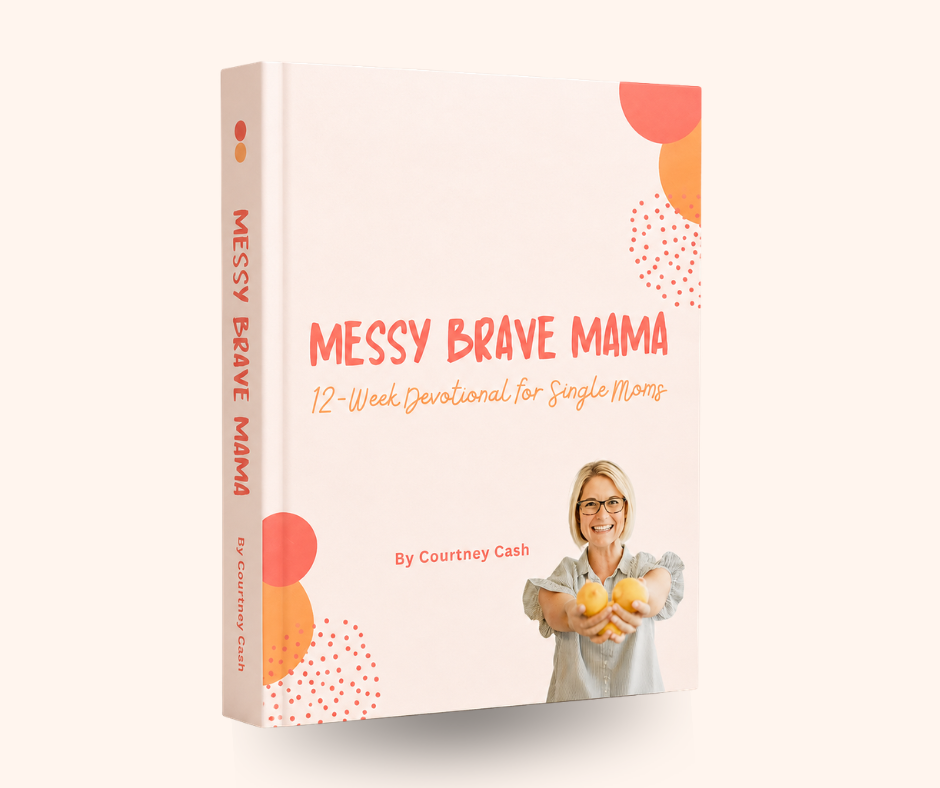
I created the 12-week Messy Brave Mama Bible study from the Scriptures, prayers, questions, and practices I actually used while digging myself out of some of the hardest seasons of my life.
Line for line. Week by week. Prayer by prayer. It isn’t advice from someone standing on the other side yelling directions.
It’s the path I walked with Jesus.
Grab your Bible, grab the study, and start with Day One. We’ll dig out together.
And if you know a woman who is still in the chapter where brave simply means make it through today, don’t just tell her she’s strong.
Sit beside her, pray with her, carry something, and if you don’t know what to say, hand her a story from a woman who has been in the mess too.
For you. For her. For the woman who needs hope right now.

Messy. Brave. Covered in grace.